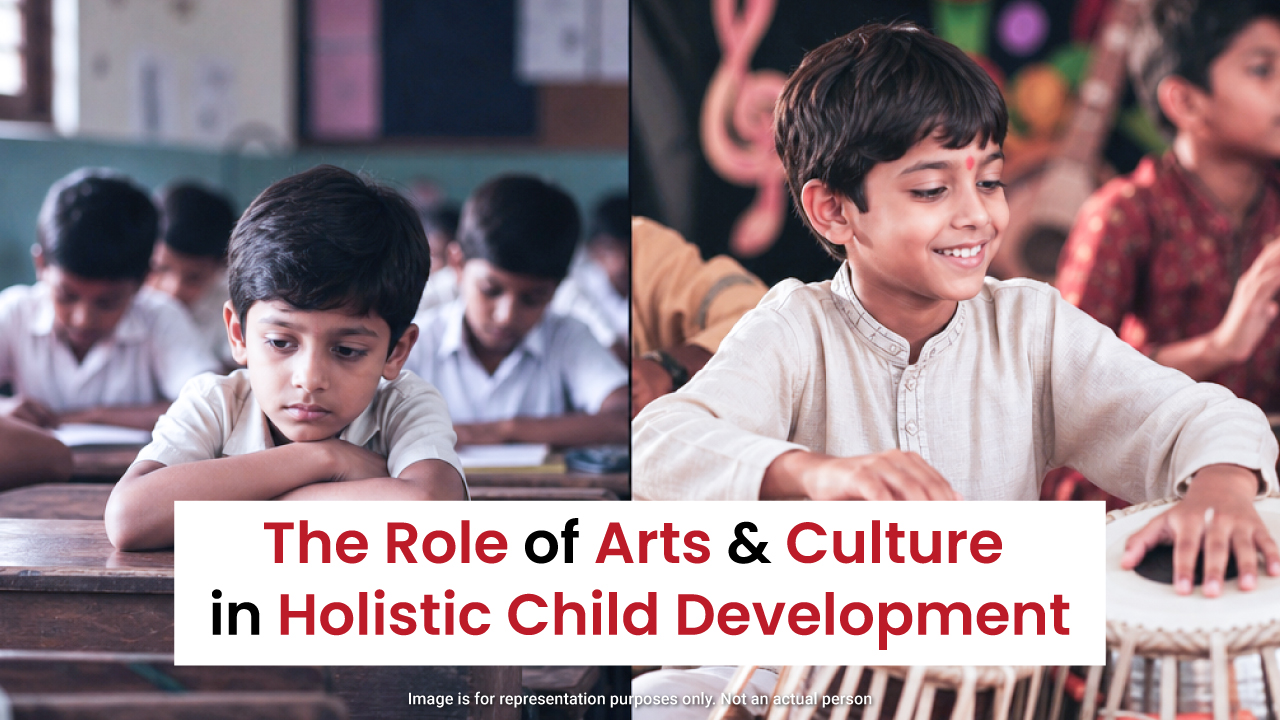
A young student is quiet and has little verbal interaction with others in the class. Words aren't easy to come by, and confidence is far away. However, there is a shift during a music activity. The student starts to tap rhythms, concentrating and getting excited about them. A quiet student who is not doing well in school expresses himself completely in another room, drawing a picture from his imagination. In another part of the picture, children are dancing in harmony, laughing, and learning as they perform a traditional folk dance together.
These times are often seen as extra-curricular. Something separate from "real learning". Yet, within them lies a powerful truth. Arts and culture are not additions to education. They are essential for how children understand themselves, others, and the world around them.
Holistic child development goes beyond academic achievement. It includes emotional growth, creativity, communication, empathy, confidence, and cultural identity. Arts and culture nurture all of these dimensions in ways that conventional learning alone often cannot.
Learning Beyond Textbooks
Often, traditional education systems focus on measurable learning outcomes such as grades and test scores. But although academic learning matters, kids are more complicated than a report card grade.
Memorization and formal teaching are not the best ways for every child to learn. Some show understanding by using movement, story, drawing, music, or performance. Arts provide new avenues for children to experiment with concepts, feelings, and imagination.
Creative activities foster a love of learning and curiosity rather than a fear of failure. A child who paints freely is not fixated on perfection. They are exploring, noticing, and sharing. This enhances problem-solving abilities, independent thinking, and confidence.
Arts are also fun, meaningful, and emotionally charged learning experiences. Theatre makes history more meaningful. Language is vital; it is alive when it is put into the form of a story. The music and rhythm enhance memory and concentration. Children start to taste education, rather than eating it up.
The Emotional Power of Creative Expression
Kids are prone to feelings they may not be able to express. Anxiety, loneliness, excitement, confusion, fear. These feelings are processed safely and naturally through creative expression.
Words may not be able to convey what a drawing can. Emotions can be expressed through dance. In art, children learn that feelings are not to be feared but need to be understood and expressed.
This emotional bond is particularly vital in the modern world, where young people are under increasing pressure and overstimulation. The arts offer opportunities for thinking, imagining, and emotional expression, which support mental health.
Emotional resilience is also developed in creative spaces. Children develop their patience in practicing a skill, their confidence in performing, and their adaptability when things don't go according to plan. They are learning these experiences subconsciously, which impact their ability to handle difficulties later in life.
Culture as Identity & Belonging
Cultural influences are also significant in influencing holistic development. Children gain an understanding of their identity and roots through stories, music, language, and local art forms.
Cultural involvement helps sustain continuity across generations in rapidly changing societies. It helps children develop respect for differences and an understanding of others' backgrounds.
Having a positive representation of culture in educational settings can be affirming for many children, particularly those from marginalized or under-resourced families and communities. It fosters connection, not rejection.
Empathy and social awareness are likewise promoted through cultural learning. Exposing children to a variety of art forms, traditions, and viewpoints increases their awareness of the world around them and broadens their minds.
Why Holistic Development Matters More Than Ever
A fast pace of technological change, high educational expectations, and societal uncertainty mark children's lives. They need more than just academic learning to prepare them for the future.
Being creative, able to communicate well, work collaboratively, and emotionally balanced has never been more critical. Arts and culture play a very significant role in developing these human skills.
However, in many education systems, creative subjects remain undervalued and/or secondary. In this case, children miss out on discovering their talents, managing their emotions, and building self-confidence outside of academics.
Holistic education is not a training program to turn children into machines. They are people who are building identities, feelings, values, and perspectives of the world around them.
The Role of SivaShiksha
SivaShiksha understands the impact that the arts and culture have in developing confident, emotionally aware, and socially connected individuals. It views education as a process that combines creativity, cultural involvement, and hands-on experience.
SivaShiksha empowers children to express themselves vocally, identityically, and imaginatively through workshops, performances, storytelling, community activities, and creative expression programs. Alongside academic learning, these experiences promote self-awareness, emotional resilience, collaboration, and confidence.
SivaShiksha not only ensures the continuity of cultural narratives but also fosters innovation and engagement within the cultural landscape, further cementing the link between education and community identity. Its efforts allow kids to be seen for their abilities, creativity, feelings, and unique ways of expressing themselves.
By doing so, SivaShiksha is helping to shift the current perspective on arts and culture as an optional enrichment in education to one that sees them as a potent means of nurturing the whole child.