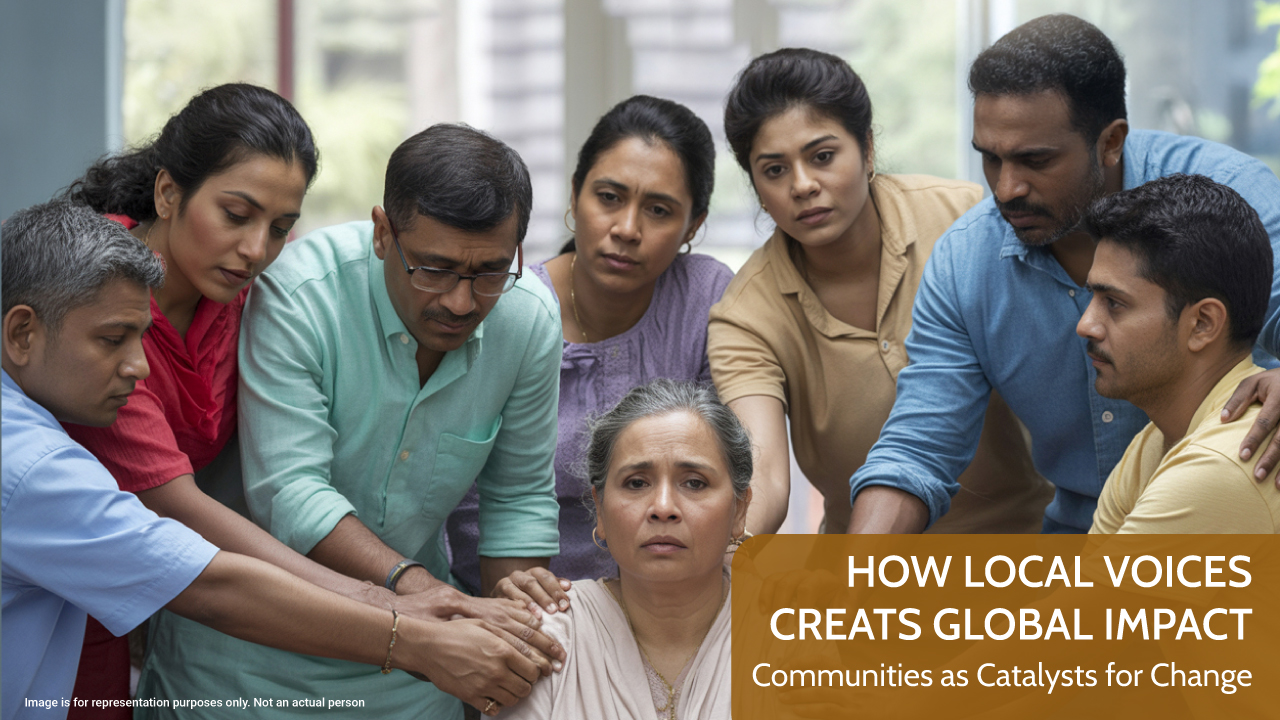
Change is often initiated at relatively small times, not in colossal conference halls or major organizations, but in familiar spaces. It happens when friends exchange ideas under a banyan tree, in a village classroom, or when neighbors unite to improve their community. These simple, everyday actions trigger transformations long before anyone notices their wider effect.
In India, people do more than survive difficult circumstances. They contribute to a positive, hopeful, and forward-moving world. They encourage innovation, preserve traditions, and support one another in times of hardship. When individuals unite around a shared purpose, their impact lasts longer than any short-term policy or strategy. Meaningful change begins at home, where people decide to take responsibility.
The Power of Community Belonging & Engagement
An individual can inspire change, but within a community, that power multiplies. A sense of belonging gives people the confidence to speak, hope, and act.
During floods in a village, neighbors come together to rebuild homes brick by brick, supporting each other even when resources are limited. Young people in urban settlements transform waste into usable spaces, converting abandoned areas into vibrant community hubs. In rural schools, educators use local stories, songs, and folklore to explain global ideas, making learning both meaningful and empowering.
These actions may not always attract global attention, yet they demonstrate the values that strengthen societies. Communities teach us that global change is not only about charity, but about collaboration. Even the smallest effort contributes to collective progress.
How Local Actions Create Global Change
Local initiatives are more influential than ever. When a farmer adopts sustainable practices, it benefits not only the village but also contributes to the broader conversation on climate resilience. When a village restores its pond, it inspires neighboring regions to protect their own resources. A grassroots mental health initiative can spark awareness that spreads nationwide.
Local wisdom often carries global relevance. Communities act as innovators, testing ideas through lived experience. Solutions developed by those who understand their own challenges tend to be more practical, inclusive, and sustainable than externally imposed models.
Lasting change begins by listening to people who deeply understand both their struggles and strengths. When empathy and experience combine, local voices shape ideas that resonate far beyond their immediate environment.
Amplifying Local Voices for Social Change
True transformation happens when long-overlooked voices are heard, women leading literacy groups, youth organizing cleanliness drives, and elders preserving cultural traditions. These individuals form the backbone of their communities. They step forward during crises, protect their heritage, and develop creative ways to adapt and thrive.
Their contributions may not always receive recognition in large systems or institutions. Yet their persistence demonstrates that sustainable progress is gradual, honest, and rooted in trust. Communities must not only speak to the world, but also engage with it, learning and growing through shared dialogue.
SivaShiksha: Empowering Community-Led Change and Growth
This belief forms the foundation of SivaShiksha’s approach. Real and lasting change occurs when communities lead and organizations support, rather than dictate, solutions.
SivaShiksha strengthens the bridge between local understanding and global impact by:
- Providing adaptable resources that communities can customize to their needs,
- Delivering training programs grounded in local realities,
- Building networks that empower individuals to become leaders of their own development.
Its initiatives span education, mental health, life skills, women’s empowerment, and youth leadership. Every project is shaped by the community’s priorities, challenges, and aspirations.
Rather than offering fixed solutions, SivaShiksha focuses on unlocking community potential and nurturing growth from within. Through learning circles, partnerships, workshops, and collaborative training, collective care is transformed into meaningful action.
The result is growth that is natural, resilient, and sustainable, built on trust, participation, and teamwork. As local leaders take ownership, they inspire other communities to follow, creating ripple effects of positive change that extend far beyond their immediate surroundings.
Key Insights
| Insights | What It Means |
|---|---|
| Meaningful change often begins at the community level | Transformative ideas emerge through local collaboration, shared discussions, and everyday problem-solving within communities. |
| Community belonging strengthens collective action | A sense of belonging motivates individuals to contribute ideas and resources, building stronger and more resilient communities. |
| Local solutions can inspire global impact | Grassroots initiatives can influence broader movements when ideas are shared and replicated across regions. |
| Amplifying marginalized voices drives inclusive progress | Recognizing voices of women, youth, and elders ensures community development is inclusive and grounded in lived experiences. |
| Community-led development creates sustainable change | Active participation leads to practical, trusted, and long-lasting solutions for social transformation. |
Frequently Asked Questions (FAQs)
It means solutions and ideas from communities can influence broader social, environmental, and economic change by inspiring others and contributing to global progress.
Communities understand their own challenges and strengths, allowing them to develop practical and sustainable solutions based on real experiences.
Local initiatives act as models that can be replicated in other regions, contributing to broader solutions for global challenges.
Local leaders, teachers, youth groups, women’s collectives, elders, and volunteers play key roles in driving meaningful community initiatives.
SivaShiksha provides training, resources, and collaborative platforms that empower communities to design and lead their own development initiatives.
Self-Reflection Questions
- How can my own experiences, skills, or ideas contribute to positive change within my community?
- What local issues do I feel most connected to, and how can I actively get involved?
- How can listening to diverse voices help create more inclusive and sustainable solutions?