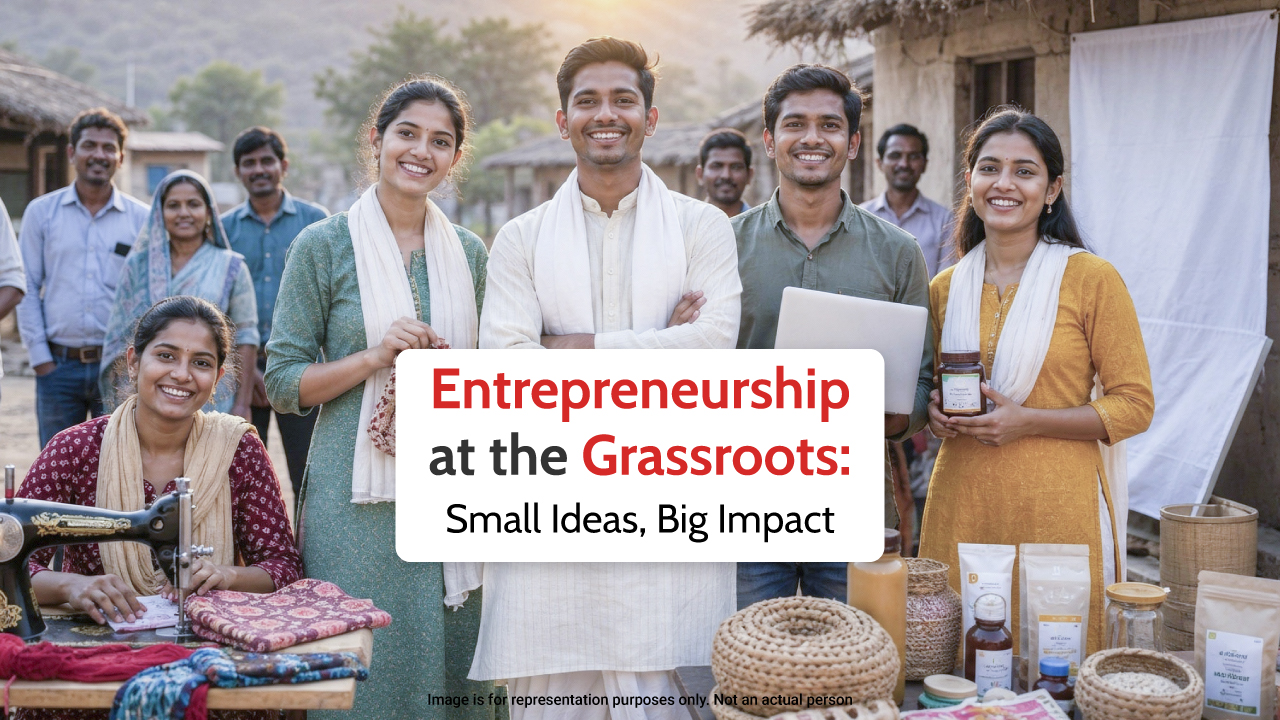
A woman sets out items she's handmade on a small table outside her house at a small-town market. A young man is repairing mobile phones and teaching basic digital skills to local children a few streets away in the evenings. They meet each afternoon with a group of women nearby who prepare homemade snacks that sell in the surrounding communities. None of these efforts started with enterprise business plans or big investments. They started out much more simply. A need, an idea, and the courage to try.
Grassroots entrepreneurship is silently changing lives across India. It doesn't always make the news or be discussed in start-up circles, but it can have a profound effect. These small businesses provide employment opportunities, build community, and inspire locally in action and effect.
At its core, grassroots entrepreneurship is not only about building businesses. It is about building agency.
When Innovation Begins with Everyday Problems
Entrepreneurship is often associated with technology, urban hubs, or large-scale innovation. But some of the most meaningful solutions emerge from people responding directly to challenges within their own communities.
In rural and semi-urban areas, individuals are creating opportunities using the resources and skills available to them. A local tailoring service may help women earn independent incomes. A community-based food initiative may support families while preserving traditional knowledge. A youth-led repair service may address everyday accessibility issues while creating employment.
While these ideas might appear insignificant on the surface, they continuously build. They serve local needs and support local economies from within.
A grassroots entrepreneur must be familiar with their community as a member. Their solutions tend to be very practical, culturally relevant, and sustainable. These are not designed remotely. They are born out of lived experiences.
The Power of Local Ownership
One of the greatest strengths of grassroots entrepreneurship is ownership. People are not waiting for change to arrive from elsewhere. They are becoming active participants in shaping their own futures.
This shift creates more than income generation. It builds confidence and self-reliance. When individuals realize they can create opportunities for themselves and others, their relationship with possibility changes.
Local entrepreneurship also creates ripple effects within communities. Small businesses often support other local vendors, create jobs, and encourage skill-sharing. Success becomes visible and relatable. Others begin to believe that they, too, can start something meaningful.
Importantly, grassroots enterprises often prioritize community wellbeing alongside profit. Many are rooted in collaboration rather than competition. Shared growth becomes part of the process.
Barriers That Often Go Unseen
Although grassroots entrepreneurs often have great potential, they often encounter many obstacles. The lack of funding, mentorship, digital literacy, and market access can impede growth.
Finances are not the only challenge for many first-generation entrepreneurs. It is psychological. The psychological aspects of fear of failure, low confidence, and social expectations can be more insurmountable than the physical ones.
Women entrepreneurs face further restrictions on mobility, safety, and access to decision-making spaces, in particular. In underserved communities, young people may lack access to networks or guidance to support innovation.
However, even within these bounds, many still make and remake. Their resilience speaks to the strength of grassroots aspirations in India.
Entrepreneurship as Community Transformation
The true value of grassroots entrepreneurship lies in its ability to create broader social impact. A single enterprise can simultaneously influence education, wellbeing, employment, and local confidence.
People making a difference from within change community thinking. Youth start to envision different careers and training opportunities. Families' openness to new ideas increases. Communities start to see themselves not just in terms of the problems they have, but also in terms of what they have.
The promotion of entrepreneurship at the grassroots also helps to maintain local identity and knowledge. The connection between traditional skills and crafts and sustainable livelihoods can bring new relevance to traditional skills.
Most importantly, all these efforts remind us that innovation is not just a city, institution or special place thing. It lives where people are ready to see a solution and get going, taking action.
The Role of SivaShiksha
Promoting entrepreneurial ecosystems is about more than just providing funding. It needs to be fostered at the community level in terms of confidence and creativity. This is SivaShiksha's endeavor, and we do so by providing learning spaces that foster initiative, self-belief, and problem-solving.
We foster personal growth as creators and contributors through experiential programs, skill development, and community engagement. Employment is not just about employability, but also about enabling individuals to create opportunities in their communities.
We combine learning and application, while fostering leadership and emotional readiness in youth and communities. SivaShiksha fosters grassroots participation, innovation, and collaboration to amplify ideas into impact.
By doing so, we are supporting an entrepreneurial future beyond geographical and privilege barriers, defined by human potential, community wisdom, and the courage to start small.
Key Insights
| Insights | What It Means |
|---|---|
| Grassroots entrepreneurship begins with local needs | Small businesses often emerge from everyday community challenges and practical solutions. |
| Local ownership builds confidence and self-reliance | Entrepreneurship empowers individuals to actively shape their own futures and opportunities. |
| Small enterprises create broader community impact | Local businesses generate jobs, encourage collaboration, and strengthen community economies. |
| Grassroots innovators face multiple hidden barriers | Funding limitations, low confidence, and restricted access to mentorship can hinder growth. |
| Entrepreneurship can drive long-term social transformation | Community-led enterprises inspire youth, preserve local identity, and encourage sustainable development. |
Frequently Asked Questions (FAQs)
Grassroots entrepreneurship refers to small-scale, community-driven businesses created to solve local problems and generate opportunities using available skills and resources. These initiatives often begin with simple ideas but create meaningful social and economic impact.
Grassroots entrepreneurship supports local economies, creates employment, encourages self-reliance, and inspires communities to participate actively in change. It helps individuals build sustainable livelihoods while addressing real community needs.
Many grassroots entrepreneurs struggle with limited funding, lack of mentorship, low digital literacy, restricted market access, and psychological barriers such as fear of failure and low confidence. Women entrepreneurs often face additional social and mobility-related challenges.
Small local enterprises often create ripple effects by generating jobs, encouraging skill-sharing, preserving traditional knowledge, and inspiring youth to explore new opportunities. These businesses strengthen community confidence and local identity over time.
SivaShiksha promotes experiential learning, leadership development, and community engagement programs that help individuals build confidence, problem-solving abilities, and entrepreneurial thinking to create opportunities within their own communities.
Self-Reflection Questions
- What everyday problems in my community could become opportunities for meaningful solutions?
- How can local skills, traditions, or resources contribute to sustainable entrepreneurship?
- What steps can I take to encourage confidence, creativity, and collaboration within my community?