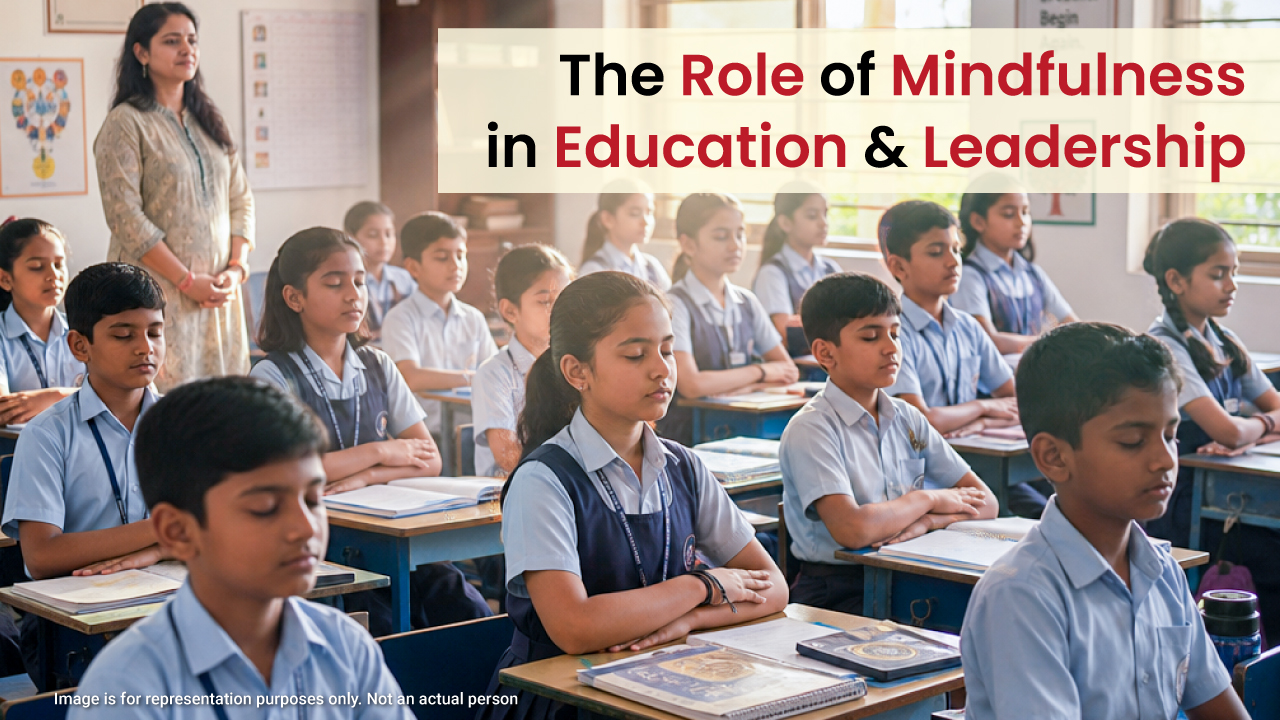
A teacher stops before lessons begin in a packed classroom. For a short time, the students fall silent with no phones, no directions, no urgency to answer. Just a few quiet breaths before the day goes on. Initially, this quietness appears strange. However, there is a change in time. The room softens. Attention returns. Conversations become calmer. Reactions take a more thought-provoking approach.
In another room, a young leader faces a difficult choice. Email keeps coming in, deadlines keep getting closer, and expectations keep mounting. There is a tendency to rush in and push on without resting. But at that moment, the power to pause, think, and act clearly outweighs the power of speed.
This is where mindfulness starts to make a difference.
Mindfulness is frequently mischaracterized as silence or meditation; it is, in fact, the art of being here and now, aware. This is observing thoughts, emotions, and surroundings without immediately reacting to them. This is an easily implementable change that can have a big impact on education and leadership.
Learning Cannot Thrive in Constant Pressure
Urgency is a new factor within contemporary educational systems. Students transition between tasks, bringing their academic expectations and social and emotional pressures with them. Many learn to perform, and few learn to stop.
Repeated stimulation over time affects concentration, emotional control, and self-confidence. Surface appearance of engagement and unease, distraction, or emotional fatigue within the child's internal state.
Mindfulness opens the space in this intensity. It increases students' awareness of their inner emotions but does not let those emotions take control. When a child understands frustration, they can respond to failure differently. When a student is aware of stress, they can learn to respond to it in healthier ways.
This is not something abstract, but rather real concepts. They directly influence the learning outcomes. Students' concentration, engagement, and memory are enhanced effortlessly.
Mindfulness also alters the emotional climate of classrooms. Rather than focusing on competition and performance, schools can start fostering empathy, patience, and thinking.
Beyond Intelligence: The Need for Emotional Awareness
Emotional skills are not emphasized in education, and intellectual skills are. But the capacity to understand emotions, interact effectively, and respond appropriately is likewise vital for long-term growth.
Mindfulness increases this emotional awareness. It helps students observe their responses before responding. It encourages listening over interrupting. With time, youth develop skills in managing relationships, conflict, and uncertainty.
Most importantly, mindfulness isn't about eradicating challenging emotions. It's about assisting people in seeing themselves and standing stronger against them.
It's a great tool to have for many students, particularly those dealing with difficult social or personal situations. It brings in pockets of calm and tranquility amidst a potentially chaotic scenario.
Why Mindfulness Matters in Leadership
These same principles are applicable far beyond the boundaries of the classroom. Mindfulness affects people's decisions, communication, and leadership effectiveness.
Today, leaders live in a world of noise and pressure. Quick answers are sometimes better than thoughtful answers. However, reactive leadership can cause confusion, burnout, and emotional disconnection within the team and community.
Mindful leadership creates a new approach. It encourages presence and reflection rather than impulsivity and constant hurry. Mindful leaders tend to be more self-aware, empathic, and grounded in their choices.
This is not passive leadership. It makes it purposeful.
A mindful leader hears but does not respond. They understand the impact of their feelings on others. They provide opportunities to listen to people rather than dictate to them. This type of leadership fosters trust and psychological safety in education, workplaces, and communities.
Mindfulness is a way for leaders to hold themselves. Eventually, even very capable people can operate with emotional imbalances and become exhausted and disconnected.
Creating Cultures of Presence & Wellbeing
When mindfulness practice is shared and embedded within a broader culture, it has the greatest impact.
This could be anything from reflecting in school to having an emotional check-in to expressing creativity to having a quiet time to reconnect with themselves. In leadership spaces, it can be more about deliberate communication and listening, and spaces that care more about wellbeing than productivity.
These practices may seem small, but they have a big impact in the long run. They develop environments that make people feel more at ease, more connected and more resilient when dealing with challenges.
In the fast-paced world that constantly seeks speed and performance, mindfulness offers a reminder that being present is a form of strength.
The Role of SivaShiksha
SivaShiksha sees education and leadership as important arts that not only encourage learning and skill acquisition but also foster the emotional and human aspects of growth. We bring together wellbeing, self-awareness, and experiential learning into learning and community environments.
SivaShiksha cultivates emotional resilience, confidence, and mindful awareness through workshops, creative engagement, thoughtful practices, and community-centered initiatives. Learners and teachers are enabled to build safe, inclusive, and connection-oriented learning environments, rooted in individual development.
Leadership based on empathy, responsibility, and human connection is a focus of its programs, not authority. SivaShiksha fosters individual and collective mindfulness, building environments where people can learn, lead, and thrive more clearly and purposefully.
By doing so, we help create an educational landscape that is more than just about achievement, it's about awareness, balance, and staying deeply engaged in a complex world.