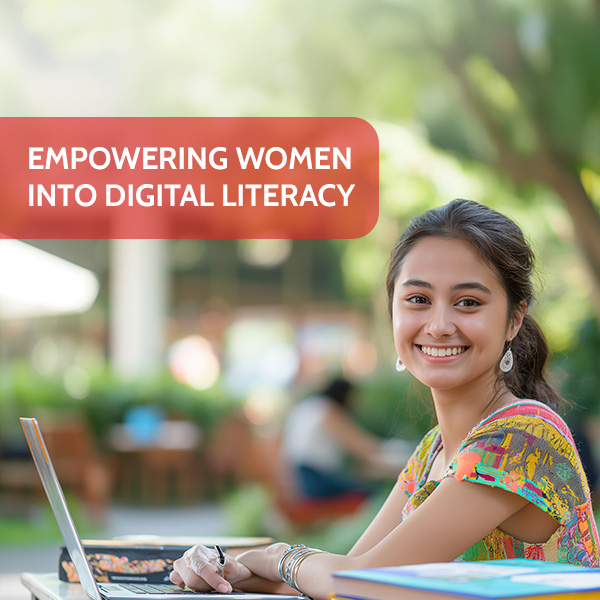
When Anjali, a 17-year-old from a small hill town, first used a tablet, she didn’t know what to expect. As the screen came to life, her classroom grew beyond its usual limits. She could now access science lessons, coding tutorials, and stories of inspiring women engineers, all in a language she understood. Across India, many girls like Anjali are eager to learn but face a primary barrier: limited access to digital literacy. It’s not just about having a phone or Wi-Fi; it’s about knowing how to use technology in a meaningful way. For many, this is still a closed door to opportunity, confidence, and creativity.
India has made substantial progress in digital inclusion, but gender still affects who gets access. National data show that girls are less likely to own smartphones or use the internet, often due to social norms. This small gap at home can turn into a lifelong gap in opportunity. Digital literacy is more than typing or browsing; it empowers girls to ask questions, learn, and lead. A digitally literate girl can access education, scholarships, and ideas from around the world, unlocking real change that starts with how we think.
For generations, girls' education was seen as a privilege, but technology can help make it a right. When one girl learns to use digital tools, her confidence can inspire others, from her siblings to her neighbors, spreading empowerment. In this way, digital literacy is more than a skill; it multiplies opportunities and helps girls grow from learners into leaders, enabling them to transition from learning to leadership.
At SivaShiksha, education works best when everyone is included. Our programs make digital literacy a life skill by combining technology with communication, creativity, and self-leadership. Through workshops, mentorship, and blended learning, we help girls become confident digital creators who are ready to click, connect, and code their way to a brighter, more inclusive future.