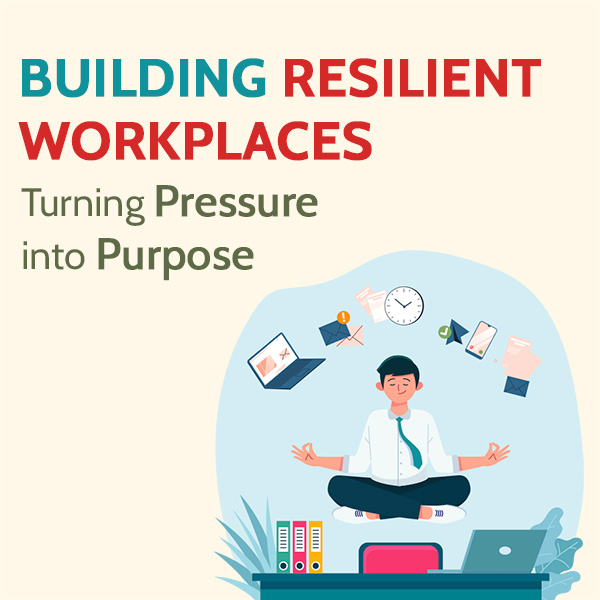
Workplaces today are busier, faster, and more demanding than ever. Emails never stop, meetings pile up, and deadlines keep tightening. In this relentless pace, stress has become the silent norm. Yet, what if workplaces could transform stress into strength, and pressure into purpose?
Understanding Workplace Stress
Stress isn’t just an emotional reaction; it’s the body’s natural response to pressure. But when it becomes chronic, it leads to burnout, anxiety, and reduced productivity. Many professionals feel trapped between high expectations and the fear of failure, creating a cycle of fatigue and frustration.
Over time, this affects not only individual well-being but also the overall health of the organization.
Shifting from Pressure to Support
A thriving workplace doesn’t ignore stress; it actually addresses it. The first step is promoting open communication. When leaders speak openly about mental health, employees feel safe to share their struggles without fear of stigma or judgment.
Regular check-ins, flexible work arrangements, and clear expectations go a long way in reducing unnecessary stress.
Building resilience also means empowering employees with tools and resources. Access to counseling, mindfulness workshops, and emotional well-being programs can help individuals manage pressure constructively. Encouraging short breaks, healthy routines, and work-life boundaries fosters both focus and energy.
The Role of Leadership
Leaders play a crucial role in setting the tone. A compassionate manager who listens, offers flexibility, and leads by example can transform the workplace culture.
Recognition and appreciation, simple gestures of acknowledgment, can significantly boost morale and motivation.
Turning Stress into Growth
Stress, when understood and managed, can become a driver of growth. It teaches adaptability, enhances problem-solving, and strengthens emotional intelligence. By cultivating a culture that values well-being, organizations can transform everyday challenges into opportunities for growth and development.
Workplaces that prioritize mental health don’t just build better employees; they cultivate better individuals. When people feel supported, they bring their best selves to work, creating stronger teams and more meaningful impact.
Let’s move from burnout to balance, and from stress to strength.