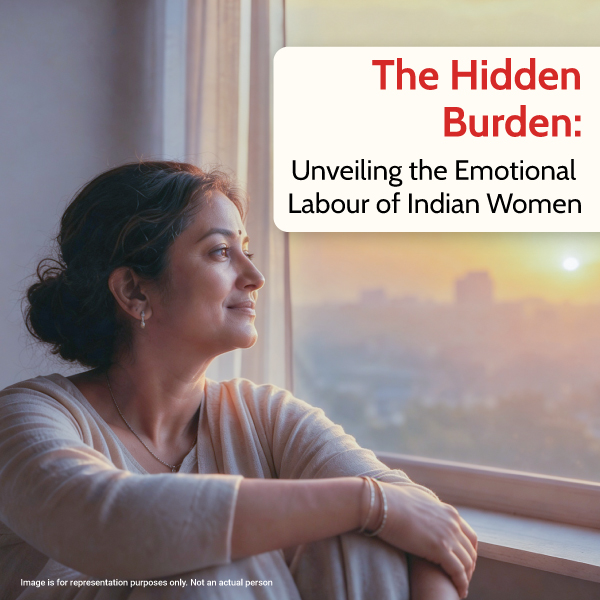
Indian women take on the daily, often unnoticed work of emotional labour, shaping their homes, relationships, and workplaces. Most days start with thinking about what others need and end with trying to keep peace and harmony. Women handle not just their own feelings but also those of the people around them. This effort is rarely acknowledged, even though it is essential for families and communities to run smoothly. Even as more women enter the workforce, they are still expected to be the main emotional caregivers at home, managing many roles with little recognition or rest.
These expectations stem from cultural beliefs that associate being a woman with selfless care, patience, and an always-emotionally-available attitude. From a young age, women are taught to put others' feelings before their own, often ignoring their own needs. Physical chores can be finished and set aside, but emotional labour never really ends or gets noticed. Over time, this imbalance can lead to exhaustion, anxiety, and feeling invisible, as women get used to putting themselves last and view self-sacrifice as strength.
Emotional labour is mostly invisible because it is part of daily routines and shows up in small, often unnoticed actions like managing family dynamics, remembering important dates, or changing how one speaks to keep things calm. Society often praises quiet endurance but ignores the long-term emotional cost. Without open recognition, women may find it hard to talk about their tiredness, worried they will be judged or seen as weak. Because of this, support systems for emotional wellbeing are rarely created, and the cycle of unrecognized labour continues.
To solve this problem, society needs to move toward sharing emotional responsibility. Groups like SivaShiksha play an important role by creating safe spaces where women can talk about emotional health, identity, and self-worth. Through workshops, wellbeing programs, and community activities, SivaShiksha helps make emotional labour more visible and encourages confidence, resilience, and shared understanding. By valuing care and emotional wellbeing, and by sharing responsibility more fairly, society can work toward a future where women are truly seen and supported beyond just being caregivers.
Learn More: How Emotional Labour Affects Mental Health and Relationships