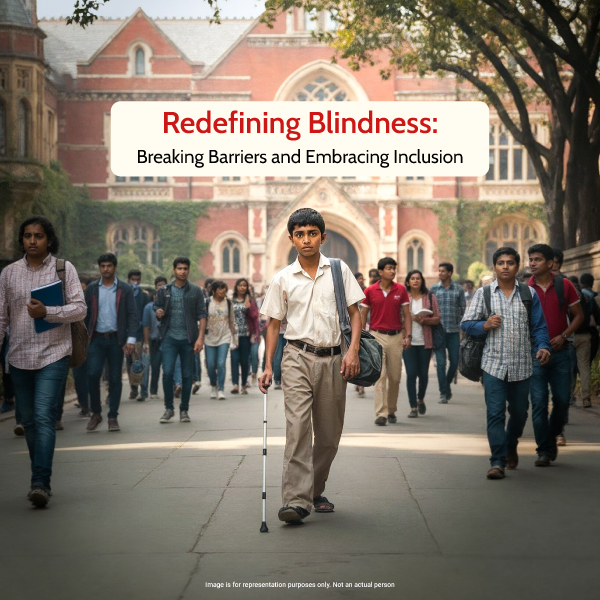
Many people misunderstand blindness, often paying more attention to the disability than to the person. When someone who is visually impaired enters a room, others may feel uneasy and behave differently. This usually happens because of long-held beliefs rather than a true understanding of what blindness means. Instead of noticing the person’s strengths and insights, people often focus on the cane, the guide dog, or what they think the person cannot do.
These misunderstandings often start early in life, when people learn to see disability as a sign of weakness or dependence. Because of this, people who are visually impaired often face unfair assumptions about what they can do at school, at work, and in public. These attitudes can hold them back, not because of their blindness, but because of society’s limited view. The real challenge is not the lack of sight, but the low expectations and quiet biases that affect daily life and opportunities.
Yet, blindness is simply another way of experiencing the world. People without sight use sound, touch, memory, and intuition to navigate their environment, revealing a different but equally valid perspective. With the right support, access, and inclusive attitudes, individuals with visual impairments thrive in education, careers, and community life. Society benefits when it recognizes and values the diverse ways people contribute, regardless of how they experience the world.
SivaShiksha helps change how people think about blindness. The organization runs education campaigns, advocates for change, and works directly with communities to challenge stereotypes about blindness and disability. By creating accessible, respectful spaces, SivaShiksha gives people with disabilities the chance to reach their potential. Their work helps make sure people are valued for what they can do, not limited by labels, and supports a more inclusive society.
Learn More: Seeing Potential: Challenging Society’s Perception of Blindness & Disability